- Get link
- X
- Other Apps
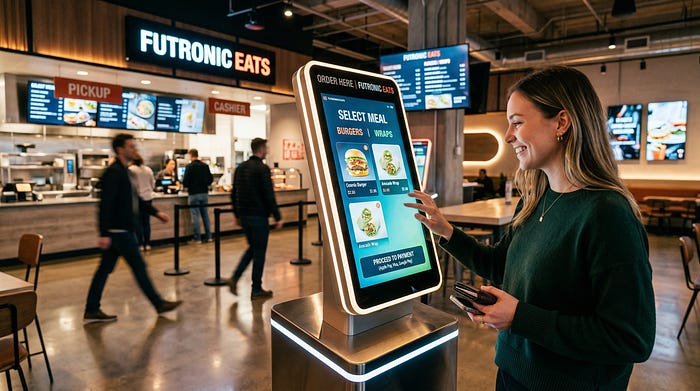
Long lines, repeated customer questions, slow checkouts, and staff constantly tied up with simple tasks — these are everyday challenges for many businesses. When employees spend most of their time handling routine interactions, productivity drops and customer frustration rises. This is where self-service kiosks step in as a practical solution. By automating common processes like ordering, check-ins, and payments, kiosks help reduce wait times and keep operations moving smoothly. The real advantage starts with time savings — faster service, fewer bottlenecks, and more efficient workflows. On top of that, businesses also benefit from lower operational costs and improved customer experiences, making kiosks a smart, scalable upgrade.
Where kiosks save the most time in day to day operations
In daily operations, the biggest time loss usually comes from repetitive tasks and process bottlenecks. Kiosks are designed to handle these efficiently by allowing customers to serve themselves without waiting for staff assistance. Instead of forming long queues, customers can complete tasks simultaneously across multiple kiosks, spreading out demand and reducing pressure on a single service point. This shift alone can significantly improve service speed and reduce congestion during busy hours.
Faster ordering and checkout means shorter lines
Self-service kiosks streamline ordering and payment into a single, guided process. Customers can browse options, customize their choices, and complete payments without back-and-forth communication. This eliminates delays caused by miscommunication or slow manual entry. In high-traffic environments like restaurants, retail stores, clinics, and service counters, kiosks help maintain a steady flow even during peak hours. With multiple customers being served at once, lines move faster, and overall waiting time drops noticeably.
Simple customer tasks stop taking up your staff’s time
Many everyday tasks do not require staff involvement but still consume a large portion of their time. Kiosks can handle check-ins, appointment confirmations, bill payments, ticket printing, product lookups, and frequently asked questions with ease. Instead of repeating the same steps throughout the day, employees can focus on more valuable responsibilities like assisting customers with complex needs or improving service quality. This shift not only saves time but also makes better use of your team’s skills.

The time savings add up across your whole business
While saving a few minutes per customer may seem small, the impact becomes significant when multiplied across daily operations. Kiosks create efficiency not just at a single touchpoint but across the entire workflow. Over time, these incremental improvements translate into hours of saved labor and smoother business performance.
Consider a simple example. If a kiosk saves just 2 minutes per transaction and your business handles 100 customers a day, that’s over 3 hours saved daily. Over a week, this adds up to more than 20 hours. Even in smaller operations with fewer customers, the cumulative time savings are still meaningful. These extra hours can be redirected toward improving service, handling peak demand, or reducing staff overload without increasing headcount.
Fewer mistakes and less rework save hidden time too
Manual processes often lead to small errors that take time to fix later. Incorrect orders, unclear handwriting, missing information, or payment issues can create delays and additional work. Kiosks reduce these risks by guiding customers through structured inputs, ensuring accuracy from the start. This means less time spent correcting mistakes, processing refunds, or responding to complaints. Over time, this reduction in rework contributes significantly to overall efficiency.
How to know if a kiosk is worth it for your business
Not every business needs a complete overhaul to benefit from kiosks. The key is identifying where time is being lost and whether automation can solve those issues. A practical approach helps you make the right decision without unnecessary investment.
Signs your team is losing time on repeat tasks
If your business regularly experiences long wait times, frequent queues, or staff constantly answering the same basic questions, these are clear indicators of inefficiency. You may notice employees rushing during peak hours, struggling to keep up with demand, or spending too much time on routine processes like check-ins or payments. These patterns suggest that your team’s time is being used on tasks that could be automated, limiting their ability to focus on more important responsibilities.
Start with one high traffic task and measure the results
Instead of implementing kiosks across all operations at once, begin with a single high-impact area such as ordering, check-ins, or payments. This allows you to test the effectiveness without major disruption. Track key metrics like wait times, transaction speed, staff workload, and customer feedback over a 30 to 60 day period. This data will give you a clear picture of how much time is being saved and whether expanding kiosk usage makes sense for your business.
Conclusion
Self-service kiosks offer a simple but powerful advantage — they save time at every level of your business. From reducing queues at the counter to cutting down on repetitive tasks behind the scenes, the impact is both immediate and long-term. The best part is that you do not need to transform your entire operation overnight. Starting small with one process can already deliver measurable results. Over time, these time savings build into greater efficiency, better service, and a more productive workday.
Comments
Post a Comment