- Get link
- X
- Other Apps
Introduction
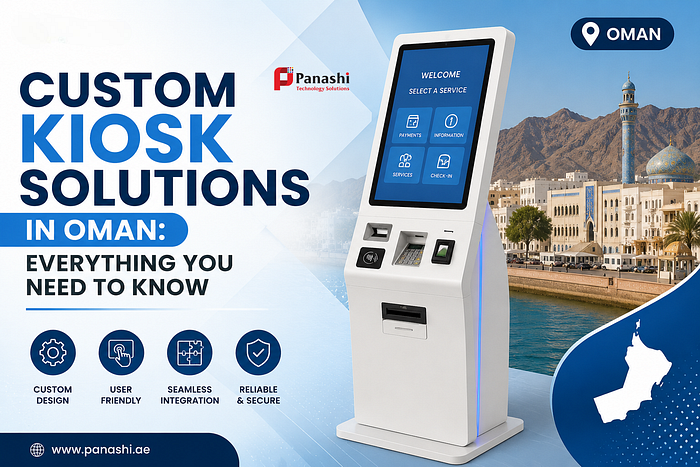
Businesses across Oman are rapidly embracing digital transformation to meet growing customer expectations for faster, more convenient services. Whether it’s shopping malls, banks, hospitals, hotels, government offices, airports, universities, or retail stores, customers now expect quick self-service options that reduce waiting times and improve their overall experience. This is where custom kiosk solutions in Oman make a significant difference. A modern kiosk is much more than a touchscreen or payment terminal it combines commercial-grade hardware, intuitive software, bilingual interfaces, secure payment integration, branding, installation, and long-term support. In this guide, you’ll learn about the different kiosk types, their benefits, design considerations, cost factors, and practical tips for choosing the right kiosk solution provider in Oman.
What Custom Kiosk Solutions in Oman Can Do for Your Business
Custom kiosks are designed specifically around your business processes rather than using a generic, one-size-fits-all solution. Every business serves customers differently, and a customized kiosk ensures that users can complete tasks quickly and efficiently while matching your branding and operational goals.
Today’s businesses use custom kiosks for:
- Self-ordering in restaurants
- Hotel and clinic check-ins
- Ticket booking
- Queue management
- Bill payments
- Product browsing
- Visitor registration
- Digital surveys
- Government document services
- Customer information
Unlike standard kiosks, custom kiosk solutions in Oman support bilingual Arabic and English interfaces, local payment methods, branded hardware, and integration with existing business systems. Whether you operate a retail store in Muscat or a hospital in Salalah, customization helps improve customer satisfaction while reducing staff workload.
A properly designed kiosk also provides valuable business insights through reporting, helping companies optimize customer journeys and improve service delivery.
The Most Useful Kiosk Types for Omani Locations
Different industries require different kiosk designs.
Retail stores and hotels often use sleek indoor touchscreen kiosks for customer information and self-service.
Restaurants benefit from self-ordering kiosks that reduce queues while increasing order accuracy.
Banks and government offices commonly install queue management kiosks that issue tokens and organize customer flow.
Hospitals and clinics use check-in kiosks to simplify patient registration.
Shopping malls rely on interactive wayfinding kiosks that help visitors locate stores and services.
Outdoor transportation hubs require rugged kiosks built to withstand heat, dust, and continuous public use.
The ideal kiosk depends on the task. Screen size, printer, QR scanner, camera, card reader, accessibility features, and enclosure design should always match business requirements.
Why Arabic, English, Payments, and Accessibility Matter
Oman serves both local residents and international visitors, making bilingual support essential.
A successful kiosk should offer seamless switching between Arabic and English while using clear fonts, simple navigation, and intuitive layouts.
Payment flexibility is equally important. Businesses may require:
- Debit and credit cards
- Contactless payments
- QR code payments
- Receipt printing
- ID verification
- Document scanning
Payment integrations should always be confirmed with approved payment providers and local banking requirements.
Accessibility should also be considered from the beginning. Features such as wheelchair-friendly height, larger touch buttons, audio guidance, and high-contrast screens make kiosks easier for everyone to use.
How to Design and Build a Kiosk That Works in Oman
Successful kiosk projects begin by understanding customer needs rather than choosing hardware first.
The typical process includes:
- Understanding customer workflows
- Site inspection
- Interface design
- Software development
- Prototype testing
- Manufacturing
- Installation
- Staff training
- Performance monitoring
Local environmental conditions should influence every design decision. Oman experiences high temperatures, dust, strong sunlight, and heavy public usage in many locations. These factors directly impact hardware selection and installation planning.
Choose Hardware for the Site, Not Just the Screen
Commercial-grade hardware delivers longer life and better reliability.
Important hardware components include:
- Industrial touchscreen display
- Anti-glare glass
- High-brightness screens
- QR and barcode scanner
- Camera
- Card reader
- Thermal printer
- Speakers and microphone
- Cooling system
- Backup power
Outdoor kiosks require weather protection, dust resistance, secure enclosures, and sunlight-readable displays.
Before purchasing, ask suppliers about:
- Warranty coverage
- Spare parts availability
- Technical specifications
- Replacement policy
- Maintenance support
Connect the Kiosk to the Systems You Already Use
A kiosk should become part of your existing business ecosystem.
Depending on your industry, it may connect with:
- Point of Sale (POS)
- Inventory management
- Appointment systems
- Hospital software
- Hotel PMS
- CRM software
- ERP platforms
- Payment gateways
- Reporting dashboards
Secure APIs help synchronize information automatically, reducing duplicate work and manual errors.
Remote monitoring also allows businesses to update content, manage software, troubleshoot devices, and monitor performance without visiting each location.

Make Security, Privacy, and Maintenance Part of the Design
Security should never be treated as an afterthought.
- Encrypted communication
- Secure payment devices
- Automatic session timeout
- Device locking
- User authentication
- Audit logs
- Tamper alerts
- Regular software updates
Organizations handling personal information should review applicable Omani privacy, cybersecurity, payment, and sector-specific requirements with qualified legal and compliance professionals.
Routine maintenance is equally important. Preventive servicing, remote monitoring, cleaning schedules, spare parts, and clear service-level agreements help maximize uptime and reduce unexpected failures.
Costs, Providers, and How to Choose the Right Kiosk Partner
The price of a custom kiosk depends on far more than the display size.
Factors affecting the overall investment include:
- Hardware configuration
- Custom software
- Payment integration
- Printer and scanner modules
- Camera
- Installation
- Shipping
- Site preparation
- Connectivity
- Support contracts
- Software licensing
- Future upgrades
Rather than focusing only on the initial purchase price, businesses should evaluate the total cost of ownership over five years, including maintenance, replacement parts, and software updates.
What Affects the Price of Custom Kiosks in Oman?
A basic information kiosk generally costs less than a fully integrated payment kiosk with ID scanning, printing, cameras, and enterprise software integration.
Request itemized quotations that clearly separate:
- Hardware
- Software
- Branding
- Integration
- Installation
- Maintenance
- Annual support
- Licensing
- Taxes
- Replacement parts
This helps avoid unexpected expenses after deployment.
Questions to Ask Kiosk Companies Before You Sign
Before selecting a kiosk provider, ask:
- Have you completed projects in Oman?
- Can you demonstrate similar installations?
- Do you provide Arabic and English interfaces?
- Can your kiosks integrate with our existing software?
- What warranty do you provide?
- Are spare parts available locally?
- How quickly do you respond to service requests?
- What cybersecurity measures are included?
- Who owns the software?
- Where is the data hosted?
- Can we start with a pilot project?
Choosing the lowest-priced supplier may lead to higher costs if ongoing support or software integration is missing.
Measure Results After Launch
Once installed, businesses should monitor key performance indicators, including:
- Daily kiosk usage
- Transaction completion rate
- Average service time
- Queue reduction
- Payment success rate
- Customer satisfaction
- System uptime
- Staff time saved
- Support requests
Early customer feedback can identify opportunities to improve screen layouts, translations, navigation, and kiosk placement before expanding to additional locations.
Starting with a pilot deployment is often the safest way to validate performance.
For businesses handling digital transactions, following PCI DSS payment security standards helps improve payment security.
Frequently Asked Questions (FAQs)
1. What are custom kiosk solutions?
Custom kiosk solutions are self-service systems designed specifically for a business’s workflow, branding, software, and customer requirements rather than using standard hardware.
2. Which industries use kiosks in Oman?
Retail, banking, healthcare, hospitality, airports, government services, education, restaurants, telecom, and transportation all benefit from kiosk solutions.
3. Can kiosks support Arabic and English?
Yes. Most custom kiosks can provide bilingual interfaces with easy language switching for both Arabic and English users.
4. Can kiosks accept card and contactless payments?
Yes. Payment capabilities depend on the selected hardware and approved payment gateway integrations available in Oman.
5. Are outdoor kiosks suitable for Oman’s climate?
Yes. Outdoor kiosks can be designed with weatherproof enclosures, cooling systems, anti-glare displays, and dust protection for reliable operation.
6. How long does it take to deploy a custom kiosk project?
Project timelines vary depending on hardware customization, software development, integrations, testing, and installation requirements.
7. Can kiosks integrate with existing business software?
Yes. Most custom kiosk solutions can connect with POS systems, ERP platforms, CRM software, hospital systems, appointment scheduling, payment gateways, and reporting tools.
8. How do businesses choose the right kiosk provider?
Look for experience, local support, integration capabilities, bilingual interface expertise, warranty coverage, spare parts availability, cybersecurity practices, and long-term maintenance services.
Conclusion
The best custom kiosk solutions in Oman combine user-friendly design, reliable commercial hardware, bilingual interfaces, secure payment capabilities, seamless software integration, and dependable after-sales support. Before investing, clearly define your business objectives, evaluate your installation environment, compare the total cost of ownership, test the solution with real users, and select a provider with proven experience and ongoing local support. A well-designed kiosk should simplify operations, reduce waiting times, improve customer satisfaction, and deliver long-term value — not become another disconnected system.
Comments
Post a Comment