- Get link
- X
- Other Apps
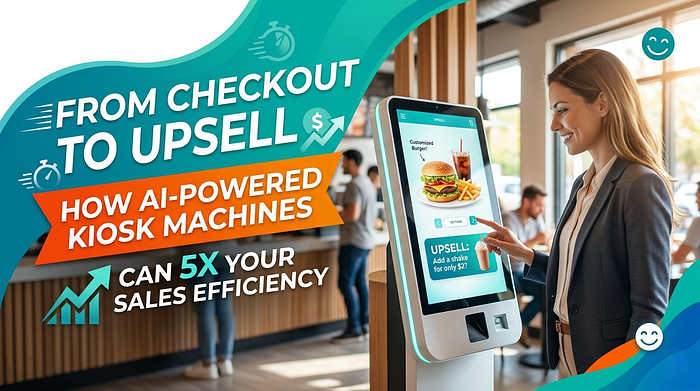
Gone are the days when self-service was just a “nice-to-have” backup for busy hours. In today’s fast-paced market, AI-powered kiosk machines have evolved into sophisticated sales engines that can effectively quintuple your transaction efficiency overnight. While “5X” sounds like a bold claim, it’s a reality rooted in data — provided your traffic, product-market fit, and kiosk setup are aligned. Simply put, these aren’t just screens; they are intelligent assistants that use machine learning to guide choices, personalize offers, and slash checkout friction. By integrating AI, businesses can simultaneously lift revenue, increase average order value (AOV), and boost customer satisfaction by meeting the modern demand for speed and relevance.
How AI Kiosks Help Businesses Sell More in Less Time
The primary goal of any retail or service business is to move customers through the buying journey with as little “drag” as possible. AI kiosks act as a lubricant for this process, turning a potential bottleneck into a high-speed revenue channel. By focusing on practical utility rather than just “flashy tech,” these machines ensure that your sales floor remains productive even during peak rushes.
They Cut Wait Times and Remove Buying Friction
We’ve all seen it: a long line at the counter that causes potential customers to peek through the window and keep walking. Every second of wait time is a “leak” in your sales funnel. AI kiosks plug these leaks by allowing multiple customers to browse, order, and pay simultaneously.
Because the interface is intuitive and the AI predicts the most likely next steps, the time-to-purchase is significantly reduced. Faster service doesn’t just mean happier customers; it means a higher volume of completed transactions. When you remove the anxiety of a ticking clock or a growing line behind a customer, they feel more comfortable exploring your offerings, leading to fewer “walkaways” and a higher total daily throughput.
They Suggest Smarter Upsells at the Right Moment
Human staff can sometimes feel awkward or “pushy” when suggesting add-ons, or they might simply forget to do it during a busy shift. An AI kiosk never forgets. More importantly, it doesn’t just guess — it uses data to recommend the most relevant bundles.
If a customer selects a high-end camera at a retail kiosk, the AI might suggest the specific memory card or protective case that fits that model. In a quick-service restaurant, it might suggest a specific dipping sauce or a discounted meal upgrade based on the current order. These contextual upsells feel like helpful suggestions rather than sales pitches, naturally raising the average order value without increasing labor costs.
What Makes AI-Powered Kiosk Machines Different from Basic Self-Service Screens
It is a common mistake to lump all kiosks into the same category. A “basic” kiosk is a static digital menu; an AI-powered kiosk is a dynamic sales consultant. The difference lies in the backend intelligence that directly impacts your bottom line and operational agility.
AI Learns from Customer Behavior and Improves Offers Over Time
Standard kiosks require manual updates to change a promotion. AI kiosks, however, are constantly “learning.” They track which items are frequently bought together, which images get the most clicks, and what time of day certain products trend.
If the system notices that a specific combo is popular on Tuesday afternoons, it can automatically move that offer to the “Featured” section of the home screen. This level of automated optimization allows businesses to adjust menus, pricing, and product placement in real-time, ensuring the most profitable items are always front and center without a manager having to lift a finger.
Personalization Makes Each Customer Journey Feel More Relevant
AI can tailor the user experience based on external variables like weather, location, or even inventory levels. If it’s a sweltering 90°F day, the kiosk can prioritize cold beverages or cooling gear. If inventory for a specific item is low, the AI can pivot to suggest a similar high-stock alternative.

How to Get the Biggest Sales Lift from an AI Kiosk Rollout
Transitioning to AI-powered self-service is a journey of optimization. To see that 5X leap in efficiency, you need a roadmap that prioritizes data over guesswork.
Start with One High-Traffic Use Case and a Simple Offer
The most successful rollouts begin by solving a specific problem. Identify the area in your business where lines are longest or where decisions are most repetitive. Launch with a clean, easy-to-navigate menu and a limited number of high-converting upsell prompts.
By starting simple, you can master the flow and ensure your staff is comfortable assisting customers with the new technology. A focused launch makes it much easier to identify what’s working and what’s not before you scale the system across your entire inventory or multiple locations.
Track the Numbers That Prove Sales Growth
To truly optimize, you must move beyond “gut feelings” and look at the hard data. Key metrics to monitor include:
- Conversion Rate: Are people starting orders but not finishing them?
- Average Order Value (AOV): Is the AI successfully upselling more than human staff did?
- Checkout Time: How many seconds does it take from the first touch to payment?
- Labor Efficiency: Are your staff now free to focus on high-value tasks like food prep or personalized consulting?
Don’t be afraid to A/B test. Try different button colors, item descriptions, or placement of the “Add to Cart” prompt. Most “overnight” successes are actually the result of weeks of steady, data-driven tweaks.
Conclusion
AI-powered kiosk machines represent a fundamental shift in how businesses interact with their customers. They aren’t just about cutting labor costs; they are about selling smarter. By making the buying process faster, more intuitive, and deeply personalized, these machines meet customers exactly where they are. As consumer expectations for speed and autonomy continue to rise, businesses that adopt intelligent self-service today will secure a significant competitive edge. It’s time to move past the static screen and embrace a tool that grows with your customers and your bottom line.
Frequently Asked Questions (FAQs)
Q: Are AI kiosks expensive to maintain? A: While there is an initial investment, the ROI typically comes from increased sales volume and reduced labor pressure. Maintenance is largely software-based, with AI updates happening automatically in the cloud.
Q: Will customers find AI recommendations intrusive? A: Not if they are relevant. AI focuses on “helpful” suggestions — like a charger for a phone or a side for a meal — which improves the user experience rather than detracting from it.
Q: Can AI kiosks work for small businesses? A: Absolutely. AI kiosks are scalable. Small businesses often benefit the most because the kiosk acts as an extra “staff member” during peak hours without the overhead of a full-time salary.
Q: How does the “AI” actually work in a kiosk? A: It uses machine learning algorithms to analyze real-time data (like current inventory and time of day) and historical data (past purchase patterns) to decide which products to show and which upsells to suggest.
Comments
Post a Comment