- Get link
- X
- Other Apps
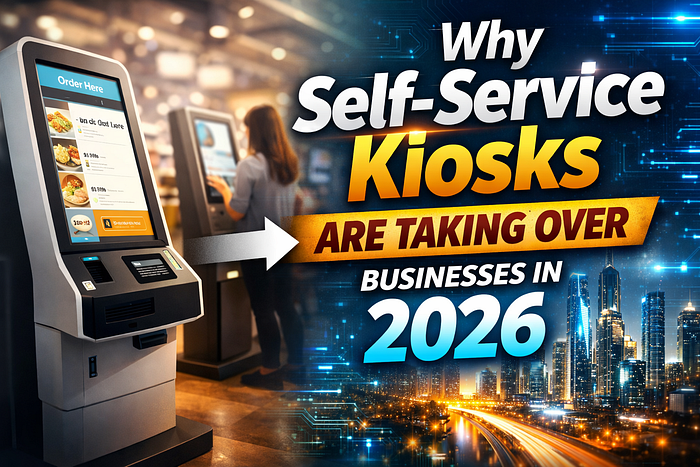
You walk into a restaurant, tap a screen, customize your meal, pay instantly, and your order is on the way — no waiting, no confusion. The same smooth experience is now common in retail stores, hotels, airports, hospitals, and even entertainment venues.
Self-service kiosks are digital machines that let customers complete tasks like ordering, checking in, or making payments on their own. In 2026, they are everywhere — and growing fast.
This shift is not just about technology trends. It’s about solving real problems for both businesses and customers. In this blog, we’ll break down why kiosks are expanding so quickly, the real business benefits behind them, and the challenges companies still need to consider.
Businesses Are Adopting Kiosks Because They Solve Real Daily Problems
Self-service kiosks have reached a tipping point in 2026. Businesses are no longer adopting them just to look modern — they are using them to handle real operational challenges. Rising labor costs, staff shortages, and increasing customer expectations are pushing companies to find smarter, faster ways to operate.
Kiosks help businesses serve more people in less time while maintaining consistency. They reduce pressure on frontline staff and create smoother workflows, especially during peak hours. Instead of adding more employees, businesses can scale operations with technology.
They Help Teams Do More When Hiring Is Hard and Labor Costs Are High
Hiring and retaining staff continues to be a challenge for many businesses. Wage pressure, high turnover, and training costs make it difficult to maintain efficiency.
Kiosks don’t always replace employees — they support them. Staff can shift their focus to higher-value tasks like customer assistance, food preparation, upselling, stocking, or handling complex issues.
During busy hours, kiosks provide stability. They handle repetitive tasks consistently, allowing teams to work smarter instead of harder. This creates a more balanced and efficient work environment.
They Speed Up Service, Cut Mistakes, and Keep Lines Moving
Speed and accuracy are critical in modern business. Kiosks make ordering faster by simplifying menus, enabling easy customization, and streamlining payments.
In quick-service restaurants, customers can place orders without miscommunication. In retail, self-checkout reduces queues. In hotels, kiosks speed up check-in. In healthcare, they simplify patient registration.
Fewer errors mean fewer complaints and better customer satisfaction. Faster service also leads to higher turnover and increased revenue. In 2026, businesses cannot afford slow or inefficient processes — and kiosks help fix that.
Customers Now Expect Faster, Easier, and More Private Experiences
The rise of kiosks is not just driven by business needs it’s also shaped by changing customer expectations. People now prefer fast, simple, and independent experiences when handling routine tasks.
Customers want convenience, control, and privacy, and kiosks deliver all three.
People Like Being in Control of Their Order, Payment, and Check-In
Kiosks allow customers to move at their own pace. They can browse menus, customize options, and complete transactions without feeling rushed or judged.
This is especially useful for complex orders, language preferences, or accessibility needs. Customers can take their time and make decisions comfortably.
For many, self-service feels easier and less stressful — especially for repeat purchases or simple transactions.
Kiosks Match the Digital Habits People Already Have in 2026
Today’s customers are already used to digital interactions. From mobile apps to contactless payments and QR codes, self-service has become part of everyday life.
Kiosks fit naturally into this behavior. They support tap-to-pay, loyalty programs, personalized offers, and seamless digital experiences.
They also bridge the gap between online and offline shopping. Customers can enjoy the convenience of digital tools while still being physically present in a store or venue.

The Businesses Winning With Kiosks Use Them as Part of a Smarter Customer Journey
Successful businesses in 2026 don’t treat kiosks as standalone machines. They integrate them into a broader customer experience strategy.
Modern Kiosks Work Better Because the Tech Around Them Got Better
Kiosk technology has evolved significantly in recent years. Today’s systems feature responsive touchscreens, cloud-based software, and seamless POS integration.
They can offer AI-driven recommendations, real-time inventory updates, and contactless payment options. Businesses can also update menus, pricing, and content across multiple locations instantly.
These advancements make kiosks more reliable, flexible, and valuable than ever before.
Kiosks Work Best When They Add Convenience Without Removing Human Help
While kiosks offer many benefits, they are not a complete replacement for human service. Some customers still prefer interacting with staff, especially for complex or sensitive situations.
Businesses must also consider accessibility, system reliability, and data privacy. Technical issues or poor design can frustrate users if not handled properly.
The most successful businesses offer a balanced approach — combining kiosks for speed and efficiency with human support for personalized service.
Conclusion
Self-service kiosks are taking over businesses in 2026 because they solve real problems. They help companies reduce costs, improve efficiency, and serve customers faster. At the same time, they meet growing customer expectations for convenience, control, and seamless digital experiences.
With better technology and smarter integration, kiosks are no longer optional — they are becoming essential. This is not just a passing trend but a clear shift in how businesses operate and how customers interact with services in the modern world.
FAQs (Frequently Asked Questions)
1. What is a self-service kiosk?
A self-service kiosk is an interactive digital machine that allows customers to complete tasks like ordering, payment, check-in, or registration without needing staff assistance.
2. Why are kiosks becoming popular in 2026?
Kiosks are growing in popularity because they help businesses reduce costs, improve speed, and enhance customer experience while meeting modern digital expectations.
3. Do kiosks replace human employees?
No, kiosks usually support employees rather than replace them. They handle repetitive tasks, allowing staff to focus on customer service and higher-value work.
4. Which industries use self-service kiosks the most?
Kiosks are widely used in restaurants, retail stores, hotels, airports, hospitals, banks, and entertainment venues.
5. Are self-service kiosks expensive to implement?
The cost varies depending on features and scale, but many businesses see a strong return on investment through reduced labor costs and increased efficiency.
6. Are kiosks safe for payments?
Yes, modern kiosks use secure payment technologies like encryption, contactless payments, and compliance with industry standards to ensure safe transactions.
7. What are the main benefits of using kiosks?
Key benefits include faster service, reduced wait times, improved accuracy, better customer experience, and lower operational costs.
8. Can kiosks improve customer satisfaction?
Yes, kiosks improve satisfaction by offering convenience, control, and faster service, which are key expectations for customers in 2026.
Comments
Post a Comment