- Get link
- X
- Other Apps
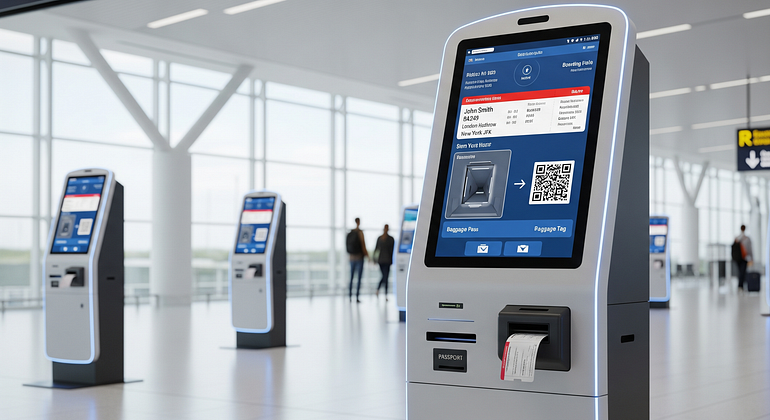
Walk into any busy airport today and you will notice one thing immediately — long lines are slowly disappearing. Travelers are skipping counters and heading straight to bright, smart kiosks that can check them in, tag their bags, and guide them through the airport with ease. Behind these kiosks is AI, which simply means computer systems that learn from data and make smart decisions.
Airport kiosks themselves are self-service screens that help passengers complete tasks such as check-in, boarding pass printing, bag drop, and travel information. But when combined with AI, they become much more powerful.
The main benefit for passengers is clear: faster, smoother, and less stressful travel. In this blog, you will learn how AI is transforming airport kiosks, what this means for travelers today, and what exciting developments are coming next. Expect practical examples, simple explanations, and a friendly guide to the future of smart travel.
How AI Is Turning Airport Kiosks Into Smart Travel Assistants
AI is pushing airport kiosks far beyond simple touch screens. These new smart kiosks can understand passengers better, predict what they might need, and personalize every step of their journey. Instead of clicking through many screens, travelers get faster answers, customized help, and solutions they didn’t even know they needed.
Below are three clear ways AI is upgrading airport kiosks from basic machines into smart, friendly travel assistants.
From Simple Check-In Screens to AI-Powered Problem Solvers
Traditional airport kiosks were designed for only a few basic tasks:
- Check-in
- Printing boarding passes
- Paying for bags
- Choosing a seat
They worked well, but they could not think or solve problems.
AI changes this completely.
Today’s AI-powered kiosks can:
- Rebook a passenger after a missed or delayed flight
- Suggest better seats based on past preferences
- Alert travelers early if a passport is expiring soon
- Analyze flight status, seat maps, and history instantly
- Recommend faster security lanes or alternative routes
For example, if a passenger arrives late and might miss a connection, the kiosk can quickly check seat availability on the next flight and offer immediate rebooking options. No need to wait in a long line to talk to an agent.
AI reads multiple data points — flight changes, delays, check-in history, or baggage rules — and turns them into simple, helpful suggestions. This makes the entire process more human-like and supportive, without the stress.
Facial Recognition and Biometrics That Speed Up Identity Checks
Biometric kiosks use facial recognition, fingerprints, or iris scans to match a traveler to their passport. In simple terms, the kiosk checks if your face matches the photo stored in your travel documents.
Why it matters:
- Shorter lines at check-in, security, and boarding
- Less need to pull out passports or boarding passes repeatedly
- Fewer mistakes and faster verification
Passengers walk up, look at the screen, and the kiosk completes the identity check within seconds.
Airports must follow strict privacy rules, and passengers should always see clear signs explaining how biometrics work and when they are used. Most airports also allow alternative options for people uncomfortable with biometrics.
The biggest benefit remains the same: faster, smoother, stress-free movement through the airport.

Multilingual AI Kiosks That Break Language Barriers
AI language models now allow kiosks to support dozens of languages. This is a game changer for travelers who struggle with English.
A multilingual AI kiosk can:
- Translate instructions instantly
- Display travel rules in simple, clear language
- Understand voice commands in different languages
- Provide step-by-step guidance without confusion
Example:
A traveler from Japan can ask, “Where is my gate?” in Japanese, and the kiosk will answer in Japanese with directions or updated gate information.
Another traveler might ask for baggage rules, and the kiosk can show a simplified version in their selected language.
This reduces misunderstandings, removes fear for first-time travelers, and creates a more welcoming airport experience for international visitors.
What AI Airport Kiosks Mean for Passengers Today
Passengers already feel the impact of AI-powered kiosks across airports worldwide. The benefits are simple: less waiting, more control, fewer surprises, smoother journeys, and better accessibility for all types of travelers.
Let’s break it down with real-life examples.
Faster Check-In, Shorter Lines, and Fewer Last-Minute Surprises
Before AI, travel looked like this:
- Long queues at check-in
- Many screens to click through
- Important alerts appearing too late
- Delays that left passengers confused
With AI-powered kiosks, the experience changes completely. The kiosk can:
- Warn about long security lines
- Suggest earlier bag drop
- Highlight missing travel information
- Provide real-time alerts about gate changes
- Offer instant rebooking during delays
A family rushing to catch a flight might be told:
“Security wait time is 25 minutes. You should drop your bags now to avoid delays.”
This helps passengers make smarter decisions while reducing stress.
Airports also benefit with smoother traffic flow and fewer travelers missing flights.
Personalized Offers, Seat Choices, and Travel Tips on the Spot
AI can understand:
- Trip purpose (solo, family, business)
- Past preferences (window seats, extra legroom, meals)
- Length of layovers
- Travel patterns
Based on this, the kiosk can suggest:
- Better seat upgrades that match real needs
- Lounge access during long layovers
- Food options nearby
- Travel reminders based on destination rules
- Visa alerts or missing document warnings
Good AI design respects the traveler’s choice. Suggestions should feel helpful — not pushy or sales-driven. Passengers should always have an easy “no, thanks” option.
These small insights make travel more personalized, comfortable, and predictable.

More Accessible Travel for Seniors, Families, and Travelers With Disabilities
AI kiosks are making airports more inclusive.
They can:
- Increase text size automatically
- Read instructions aloud
- Provide simple, visual steps
- Adapt to slower interaction speeds
- Remember special assistance preferences
- Offer extra time before auto-timeout
Examples:
- A parent traveling with small children can check in faster with simplified screens.
- An older traveler who is not tech-savvy can use a voice-assisted flow.
- A passenger with low vision can switch to high-contrast, large-font mode.
These changes help airports provide universal design — a system that works for everyone, not just frequent flyers.
The Future of AI + Airport Kiosks: What’s Coming Next for Passenger Experience
Over the next 3 to 5 years, AI airport kiosks will get even smarter. Travel will become more connected, more touchless, and more predictable. Airports will link kiosks with mobile devices, transport systems, and city services to create a seamless travel loop.
Below are the trends shaping the next generation of airport kiosks.
Touchless, Connected Journeys From Curb to Gate
Imagine arriving at the airport and your journey being connected from curb to gate.
Here’s how it might look:
- Luggage drop uses computer vision to track bags automatically
- Facial recognition replaces document checks at multiple points
- Wayfinding kiosks guide travelers in real time
- Your phone syncs with the kiosk to update gate changes instantly
- Smart notifications warn if walking time to the gate is long
During peak seasons, this can reduce congestion and eliminate confusion for thousands of passengers.
The entire journey feels like one connected system — simple, fast, and stress-free.
Balancing Smart Automation With Human Help and Data Privacy
Even as AI grows, people still want human help when things get complicated.
AI kiosks will handle routine tasks, but trained staff will always be needed for:
- Emotional situations (lost bags, medical emergencies)
- Complex rebookings
- Passengers uncomfortable with biometrics
- Families with special needs
Data privacy will also stay important. Travelers want to know:
- How their biometric data is stored
- How long it is kept
- Whether they can opt out
Airports must stay transparent, offer choices, and follow global standards.
The best future is one where AI handles efficiency, and humans handle empathy.
Conclusion
AI is turning airport kiosks into powerful smart travel assistants. These kiosks help passengers save time, avoid stress, and enjoy smoother journeys through busy airports. They can check in travelers, offer real-time alerts, personalize guidance, and support multiple languages — all while making airports more accessible for everyone.
The technology is still evolving, and the next few years will bring even more connected, touchless, and predictive experiences. Airports that invest in AI kiosks today are preparing for a future where travel is faster, friendlier, and more reliable.
For airport and airline leaders, the next step is simple: start with small AI kiosk pilot projects, test real traveler journeys, and upgrade current kiosk systems with AI in mind. The future of travel begins with smart, human-friendly technology.
FAQs
1. What is an AI airport kiosk?
An AI airport kiosk is a smart self-service machine that uses artificial intelligence to help passengers check in, drop bags, get alerts, and personalized travel assistance.
2. How do AI kiosks help passengers?
They reduce waiting time, offer real-time updates, give personalized options, and make the airport journey smoother and stress-free.
3. Are biometric airport kiosks safe?
Yes. Airports follow strict global standards. Passengers usually receive clear options and can choose alternatives if uncomfortable with biometrics.
4. Do AI kiosks replace human staff?
No. They handle routine tasks, while human staff focus on complex or emotional needs. Both work together for better service.
5. How do multilingual AI kiosks work?
They use language models to translate instructions, provide voice help, and support travelers who do not read English well.
6. What future features can we expect?
Touchless journeys, connected mobile-kiosk experiences, predictive alerts, and stronger links between airport, airline, and city transport.
7. Are AI airport kiosks helpful for elderly or disabled travelers?
Yes. They offer large text, voice assistance, simplified steps, and saved preferences to support different accessibility needs.
Comments
Post a Comment