- Get link
- X
- Other Apps
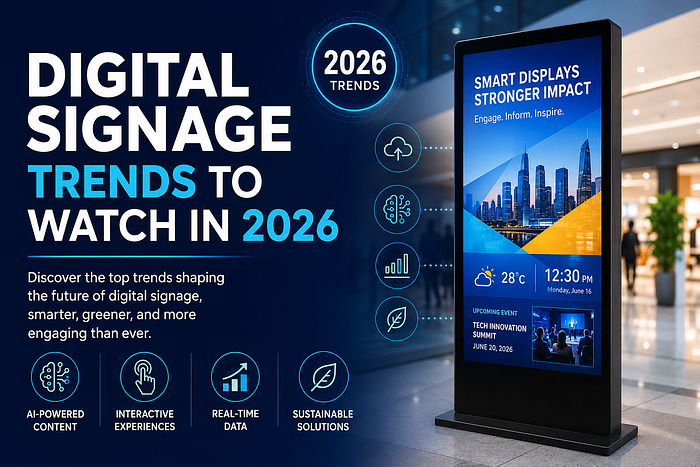
Digital signage is evolving faster than ever, and 2026 is shaping up to be a defining year for businesses that rely on digital communication. From AI-powered content creation to cloud-based management and interactive displays, today’s digital signage solutions are smarter, more flexible, and easier to manage than traditional display systems.
Organizations across retail, healthcare, education, hospitality, corporate offices, and public spaces are investing in digital signage to improve customer engagement, deliver real-time information, reduce printing costs, and simplify content management. Rather than displaying static messages, modern screens can now adapt content based on audience behavior, location, weather conditions, inventory levels, and other live data.
This guide explores the biggest digital signage trends in 2026, explains why the industry is changing so quickly, highlights where adoption is growing fastest, and provides practical advice for businesses planning to upgrade their signage systems.
Why Digital Signage Is Changing So Fast in 2026
Several technologies are coming together to reshape digital signage. Higher-resolution displays have become more affordable, cloud platforms have simplified remote management, AI tools are making content creation easier, and businesses increasingly need instant communication with customers and employees.
At the same time, customer expectations continue to rise. People expect timely, relevant, and personalized information wherever they go, whether they’re shopping, visiting a hospital, attending a university, or entering an office building.
The Shift from Static Displays to Dynamic, Data-Driven Content
Traditional digital signs often displayed the same content throughout the day. Modern digital signage systems automatically adjust messages based on real-time information.
For example, a retail store can promote umbrellas when rain is forecast, restaurants can highlight breakfast menus in the morning and dinner specials in the evening, while transportation hubs can instantly update arrival times and service alerts. Businesses can also display queue lengths, inventory availability, local events, or emergency notifications without manual intervention.
This dynamic approach keeps content relevant, improves customer engagement, and delivers better communication.
Why Budgets Are Moving Toward Flexible, Cloud-Based Systems
Cloud-based digital signage platforms are becoming the preferred choice because they simplify remote management and improve scalability. Platforms like Google Cloud and Microsoft Azure provide secure cloud infrastructure that supports reliable digital signage deployments.
Remote monitoring, automatic software updates, centralized scheduling, and easier maintenance reduce long-term operational costs. Cloud solutions also scale more efficiently, making them ideal for organizations managing multiple locations.
The Biggest Digital Signage Trends to Watch in 2026
Technology continues to expand what’s possible with digital signage. These are the trends businesses should pay attention to throughout 2026.
AI Is Making Content Planning and Personalization Much Easier
Artificial intelligence is changing how businesses create and manage digital signage content.
AI tools can recommend scheduling times, generate promotional copy, suggest layouts, analyze viewer engagement, and optimize playlists automatically. Some systems even adjust content based on audience demographics, time of day, or purchasing behavior.
Despite these improvements, human review remains essential. Marketing teams should ensure that AI-generated content matches brand guidelines, remains accurate, and aligns with business goals.
Screens Are Becoming More Interactive and Touch-Friendly
Digital signage is increasingly becoming an interactive experience rather than simply displaying information.
Touchscreens, QR codes, mobile device integration, and self-service functionality allow users to explore information independently. Retail customers can browse products, hospital visitors can find departments, students can access campus maps, and office visitors can check meeting schedules.
Interactive displays improve convenience while reducing the workload for employees.
Real-Time Data Feeds Are Turning Signs into Live Information Hubs
One of the most valuable trends is the integration of live data into digital signage.
Businesses now connect displays to inventory systems, weather services, event calendars, transportation networks, social media feeds, and internal dashboards. As information changes, displays update automatically without requiring manual edits.
Examples include:
- Live transit schedules
- Restaurant menu updates
- Conference agendas
- Manufacturing dashboards
- Emergency alerts
- Flight information displays
Real-time communication helps organizations remain accurate and responsive.

Sustainability Is Shaping Screen Choice and Content Strategy
Environmental responsibility is influencing digital signage investments.
Organizations increasingly select energy-efficient commercial displays with lower power consumption and longer operating lifespans. Smart scheduling automatically turns screens off during non-business hours, reducing electricity costs.
Replacing printed posters with digital displays also minimizes paper waste while allowing instant updates without reprinting marketing materials.
Businesses benefit from both lower operating expenses and improved sustainability goals.
Where the Most Growth Is Happening by Industry
Digital signage adoption continues to expand across many industries, although each sector uses the technology differently.
Retail and Quick-Service Restaurants Are Using Signage to Drive Sales
Retailers and restaurants remain among the fastest adopters of digital signage.
Digital menu boards allow restaurants to instantly update pricing, promote limited-time offers, and highlight high-margin products. Retail stores use displays for seasonal promotions, product recommendations, cross-selling opportunities, and location-specific advertising.
Because content can change within seconds, businesses respond more quickly to inventory changes and customer demand.
Healthcare and Education Are Using Signage for Clarity and Flow
Hospitals, clinics, schools, and universities rely on digital signage to improve communication and reduce confusion.
- Wayfinding systems
- Appointment information
- Emergency notifications
- Class schedules
- Campus announcements
- Waiting room communication
Clear digital messaging helps visitors navigate facilities more efficiently while reducing pressure on front-desk staff.
Corporate Offices and Public Spaces Want Better Communication
Corporate environments increasingly use digital signage to improve both employee communication and visitor experiences.
Displays provide meeting room schedules, company announcements, performance dashboards, safety reminders, interactive campus maps, visitor check-in information, and welcome messages.
In public venues such as airports, government buildings, convention centers, and shopping malls, digital signage improves navigation while delivering timely updates.
What Buyers Should Look for Before Upgrading Their Signage in 2026
Selecting the right digital signage solution requires more than comparing screen sizes or prices.
Cloud Management, Device Support, and Content Control
A strong cloud-based content management system should allow businesses to:
- Manage displays remotely
- Schedule content easily
- Support multiple screen types
- Organize media efficiently
- Scale across multiple locations
Compatibility between displays, media players, and software should also be verified before deployment.
Security, Accessibility, and Uptime Should Be Non-Negotiable
Reliable digital signage requires strong security and consistent performance.
Look for features such as role-based user permissions, encrypted communications, automatic software updates, and secure cloud infrastructure.
Accessibility is equally important. High-contrast colors, readable fonts, clear layouts, and ADA-friendly design help ensure content is accessible to all users.
Reliable uptime minimizes interruptions and keeps important information available when needed.
Total Cost Matters More Than the Sticker Price
Many buyers focus only on hardware pricing, but the total cost of ownership provides a much clearer picture.
Consider:
- Display hardware
- Media players
- Software licensing
- Installation
- Content creation
- Technical support
- Maintenance
- Future upgrades
Evaluating all costs helps organizations choose a solution that delivers better long-term value rather than simply the lowest upfront investment.
Conclusion
Digital signage in 2026 is becoming more intelligent, interactive, and connected than ever before. AI-powered content management, cloud-based platforms, real-time data integration, sustainable display technologies, and touch-enabled experiences are transforming how organizations communicate with customers, employees, and visitors.
Businesses that invest in flexible, scalable digital signage solutions today will be better prepared to meet growing expectations for personalized communication and instant information delivery. As technology continues to evolve, choosing the right platform is no longer just about displaying content — it’s about creating meaningful, engaging experiences that support long-term business growth.
Whether you’re planning your first deployment or upgrading an existing network, understanding these trends will help you make smarter decisions for the years ahead.
Frequently Asked Questions (FAQs)
1. What is digital signage?
Digital signage is a network of electronic displays used to present multimedia content such as advertisements, announcements, menus, directions, schedules, and real-time information in public or private spaces.
2. Why is AI important for digital signage in 2026?
AI helps automate content scheduling, personalize messaging, optimize playlists, generate content ideas, and analyze audience engagement, making digital signage more effective and easier to manage.
3. Which industries benefit the most from digital signage?
Retail, restaurants, healthcare, education, hospitality, corporate offices, transportation, banking, manufacturing, and government organizations all benefit from improved communication and customer engagement.
4. What are the advantages of cloud-based digital signage?
Cloud-based systems enable remote management, faster updates, centralized control, easier scaling, reduced maintenance, and improved operational efficiency across multiple locations.
5. How does digital signage support sustainability?
Digital signage reduces paper waste, minimizes printing costs, supports energy-efficient displays, enables smart power scheduling, and extends the useful life of communication assets.
6. What should businesses consider before purchasing a digital signage solution?
Businesses should evaluate cloud management capabilities, software compatibility, security features, accessibility, hardware reliability, content management tools, scalability, and the total cost of ownership before making an investment.
Comments
Post a Comment