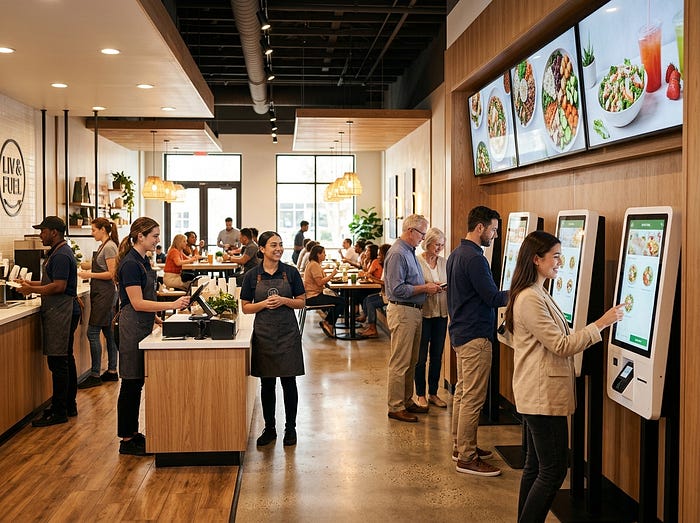
Every hospitality operator knows the feeling. The doors open, a rush hits, and suddenly the wheels start to wobble. Long wait times at the host stand, a messy service flow on the floor, clunky guest handoffs, and rising labor costs that eat into your margins.
The knee-joint reaction is almost always: “We need to hire more people.”
But adding more bodies to a broken system just creates a more expensive, crowded, and chaotic floor. Front-of-house (FOH) growth doesn’t have to mean a higher headcount. By implementing smarter systems, optimizing your layout, and removing friction, your restaurant, hotel, or venue can handle significantly higher guest volumes with the exact same team — all while reducing burnout and keeping hospitality warm.
Here is your practical guide to scaling your operations through better systems, not just harder work.
Find the Bottlenecks That Slow Your Front-of-House Team Down
Before you can fix your speed of service, you need to know exactly where time is slipping through the cracks. Small delays compound quickly during peak hours.
Watch the Guest Journey From Arrival to Checkout
To spot the real problems, you have to look at your operation through the eyes of your guests. Walk the floor and map out every single touchpoint:
- Arrival & Greeting: Are guests piling up at the door?
- Seating/Check-in: Is there a delay between a table opening up and the next party being seated?
- Service & Ordering: How long does it take for a team member to make first contact?
- Payment & Exit: Is the final transaction dragging out the experience?
Look closely at the transitions. Clunky handoffs — like a host passing a party to a server without communicating a special request — are usually where confusion and delays happen.
Use Simple Data to See Where Service Breaks Down
You don’t need a degree in data science to find your operational leaks. Look at your POS, reservation platform, or digital ticketing systems for these key metrics:
- Table turns and ticket times: Where do things stall?
- Wait times vs. quoted times: Are you consistently underestimating the wait?
- Order error rates: High errors mean the team is rushed or the system is confusing.
Small patterns often reveal the biggest opportunities. If your data shows table turns slow down by 15 minutes between 7:00 PM and 8:30 PM, you know exactly where to investigate.
Ask Your Staff What Wastes the Most Time
Your hosts, servers, cashiers, bartenders, and floor managers are the ones fighting the friction every day. Ask them directly: “What is the most frustrating part of your shift?”
Tip: Your team knows exactly where the systems fail. They’ll tell you if the POS screen layout is confusing, if they are running across the room too often for silverware, or if the host stand lacks visibility on clean tables. Listen to them.
Use Better Systems So Your Team Can Do More with the Same People
Scaling up without burning out your staff requires replacing manual grunt work with streamlined workflows and smart tools.
Standardize the Steps That Happen Over and Over
Inconsistency is the ultimate speed killer. When everyone does things their own way, training is harder and mistakes skyrocket. Create ironclad standards for repetitive tasks:
- Checklists: Open, shift-change, and closing duties must be written down and non-negotiable.
- Scripts: Give hosts and servers clear, concise language for greeting guests, handling long waits, or explaining menus.
- Role Ownership: Define exactly who wipes the table, who resets the water glasses, and who runs the food.

Automate Tasks That Do Not Need a Human Touch
Automation shouldn’t replace hospitality; it should free your team up to deliver it. Let technology handle the administrative weight:
Make Communication Faster Between the Floor and the Back End
When communication breaks down between the FOH and the back-of-house (BOH) or kitchen, service grinds to a halt. Implement tools that bridge the gap instantly.
Whether it’s handheld tablets for tableside ordering kiosk, shared digital dashboards, or discreet headsets for the hosting and management team, instant information means fewer steps, zero missed requests, and a much quieter, calmer environment.
Redesign the Guest Experience to Move Faster Without Feeling Rushed
Speed shouldn’t feel frantic to the guest. A well-designed flow feels efficient, modern, and convenient.
Cut Friction at the Busiest Moments
Look at your highest-traffic moments and ruthlessly eliminate unnecessary steps. If guests have to wait in one line to order, another line to pick up, and a third area to get napkins, your layout is working against you. Consolidate steps so that a guest can transition from arrival to service smoothly.
Give Guests More Self-Service Options Where It Makes Sense
Modern consumers actually prefer control over certain parts of their experience. Lean into self-service for utility steps:
- Online reservations so they don’t have to call.
- Digital kiosks or mobile ordering for high-volume, casual, or grab-and-go setups.
- Digital menus that are always accurate and updated in real-time.
When guests handle their own ordering or payment, your staff can focus entirely on running items, maintaining cleanliness, and building relationships.
Set Clear Expectations So Guests Know What Happens Next
Anxiety makes time feel longer. If a guest doesn’t know how long they’ll be waiting or how the queue works, they will repeatedly interrupt your FOH staff for updates.
- Use accurate, automated text updates for waitlists.
- Place clear, visible signage for pickup zones and lines.
- Have staff briefly explain the process (“Your server will be right with you, feel free to scan the QR code to browse our specials”).
Clear communication keeps guests relaxed and keeps your staff focused.
Build a Team That Can Handle More Volume Without More Stress
A scalable operation relies on a flexible, confident workforce. By changing how you train and schedule, you can maximize your current team’s capacity.
Cross-Train Staff for the Jobs That Overlap
Silos create bottlenecks. If your host stand is drowning but three servers are standing by the kitchen doors with nothing to do, your labor is misallocated.
- Train hosts to help clear and reset tables.
- Train servers to greet and seat guests during a door rush.
- Ensure managers are ready to jump into any role to clear a temporary logjam.
Multi-skilled staff can naturally shift their weight to wherever the demand spikes in real-time.
Schedule Around Demand, Not Habit
Stop writing schedules based on “what we did last week.” Analyze your historical data, local events, weather patterns, and seasonal shifts to build smarter schedules.
Speed comes from confidence, and confidence comes from practice. Run short, 5-minute pre-shift huddles to practice common scenarios. Role-play how to handle a difficult guest request or how to upsell efficiently. Provide real-time, constructive feedback loops so your team learns to make faster, independent decisions on the floor without needing to track down a manager.
The Takeaway: Start Small to Scale Big
Scaling your front-of-house operations isn’t about buying a million dollars worth of tech or forcing your staff to run faster. It is about removing waste, smoothing out the flow, and letting smart systems do the heavy lifting.
Don’t try to overhaul your entire operation by Friday. Pick just one bottleneck today. Work with your team to fix that single process, measure the difference it makes over a weekend, and then move on to the next. Step by step, you’ll build a high-capacity, stress-free floor that drives more revenue — all with the great team you already have.
Comments
Post a Comment