- Get link
- X
- Other Apps
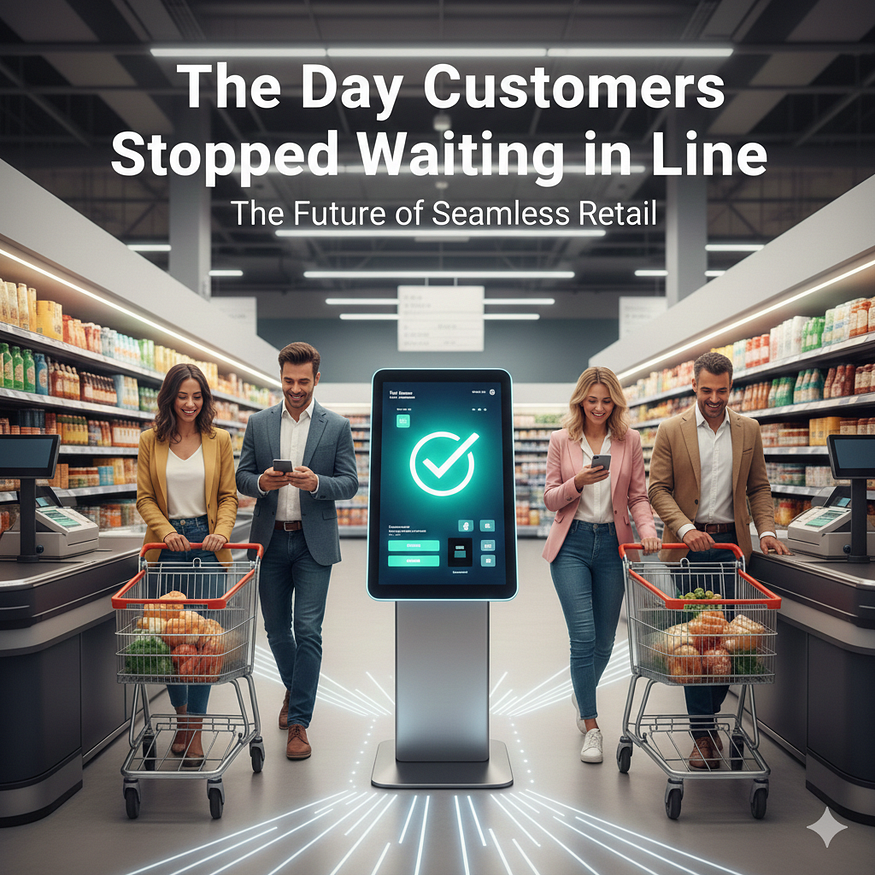
There was a time when waiting in line felt unavoidable. Long queues at restaurants, banks, hospitals, and retail stores were simply part of the experience. Customers waited. Businesses apologized. Time was lost on both sides.
Then one day, things quietly changed.
No announcements. No dramatic shift. Just a screen placed where a counter used to be. And suddenly, customers stopped waiting in line.
This is the story of how self-service technology transformed everyday experiences — and why businesses that adopt it are moving faster than ever.
The Real Problem Wasn’t the Line
It Was the Time Lost
Waiting in line doesn’t just frustrate customers. It affects how they feel about a brand.
Customers waiting too long often:
- Leave without completing a purchase
- Feel stressed before service even begins
- Associate the brand with inconvenience
- Avoid returning in the future
For businesses, long queues mean:
- Slower service throughput
- Overworked staff
- Higher operational costs
- Lost revenue during peak hours
The problem wasn’t customer demand.
The problem was the system.
The Moment Self-Service Changed Everything
The shift began when businesses introduced self-service kiosks and digital touchpoints.
Instead of waiting for a staff member, customers could:
- Place orders themselves
- Make payments instantly
- Check in or register without assistance
- Get information in seconds
What once took minutes now took seconds.
No pressure.
No confusion.
No waiting.
That’s the day customers stopped standing in line — and started moving forward.
Why Customers Prefer Self-Service Today
Modern customers value three things above all:
speed, control, and simplicity
Self-service systems deliver all three.
1. Faster Experience
Customers complete tasks at their own pace without delays.
2. More Control
They can review options, customize choices, and avoid miscommunication.
3. Reduced Human Error
Orders, payments, and entries are more accurate when customers input details themselves.
It’s about removing friction.

How Businesses Benefit Beyond Speed
Self-service technology doesn’t just help customers. It transforms business operations.
Operational Efficiency
- Handles more customers with fewer bottlenecks
- Reduces dependency on counter staff
- Maintains consistency during peak hours
Higher Revenue
- Faster transactions increase daily order volume
- Upsell prompts and add-ons boost average order value
Better Staff Utilization
- Employees focus on support and experience instead of repetitive tasks
Data-Driven Decisions
- Real-time insights into customer behavior
- Better demand forecasting and service optimization
Where This Shift Is Happening the Fastest
Self-service adoption is accelerating across multiple industries:
- Restaurants and food courts
- Retail stores and malls
- Banks and financial service centers
- Hospitals and clinics
- Airports and transport hubs
- Government and public service offices
Anywhere customers once waited in line, screens are now doing the work.
Is This the End of Traditional Counters?
Not entirely.
Counters still matter — for complex issues, personal assistance, and relationship building.
But routine tasks no longer need to slow everyone down.
The future belongs to hybrid service models, where:
- Simple tasks are handled digitally
- Human staff focus on meaningful interactions
This balance creates better experiences for everyone.
The Bigger Shift No One Talks About
Self-service isn’t just a technology upgrade.
It’s a mindset change.
Businesses are no longer asking:
“How do we serve customers faster?”
They’re asking:
“How do we remove the need for waiting at all?”
And customers are responding by choosing brands that respect their time.
Final Thought
Customers didn’t stop waiting in line because they became impatient.
They stopped waiting because technology finally caught up with their expectations.
The businesses that understand this aren’t just saving time.
They’re building loyalty, trust, and a better future for customer experience.
Frequently Asked Questions (AEO Optimized)
What is the main benefit of self-service kiosks?
Self-service kiosks reduce waiting time, improve customer satisfaction, and increase operational efficiency for businesses.
Do customers really prefer self-service over staff assistance?
Yes, especially for quick and routine tasks. Customers value speed, control, and convenience.
Are self-service systems suitable for small businesses?
Absolutely. Even small businesses can benefit from reduced queues, better order accuracy, and lower staffing pressure.
Will self-service replace human jobs?
No. It shifts staff roles from repetitive tasks to customer support and experience-focused work.
Comments
Post a Comment